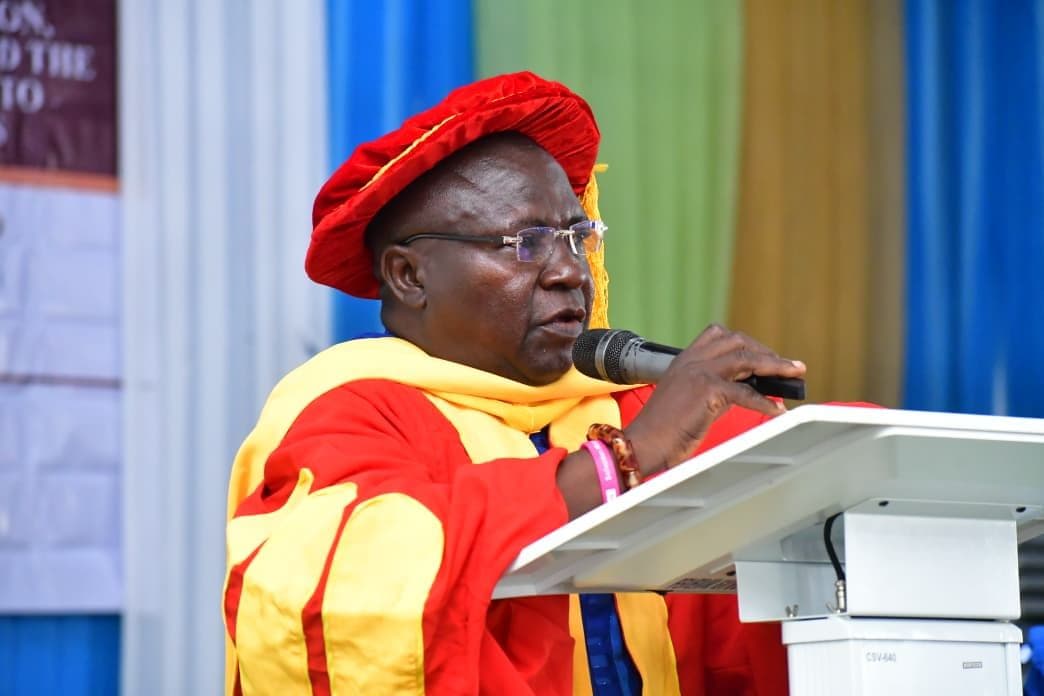
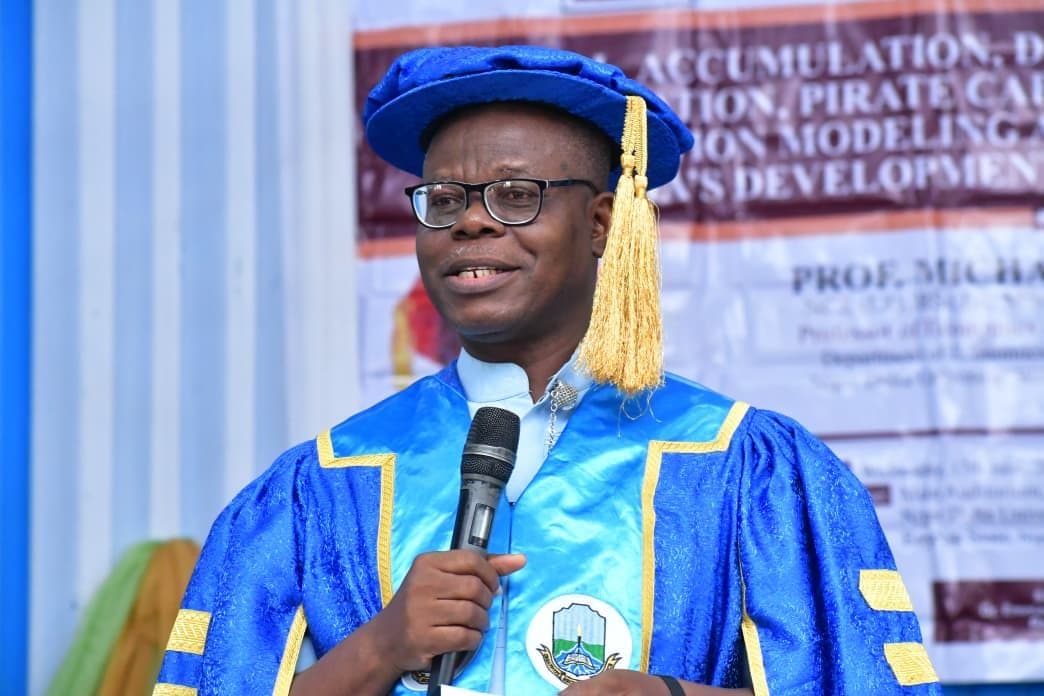
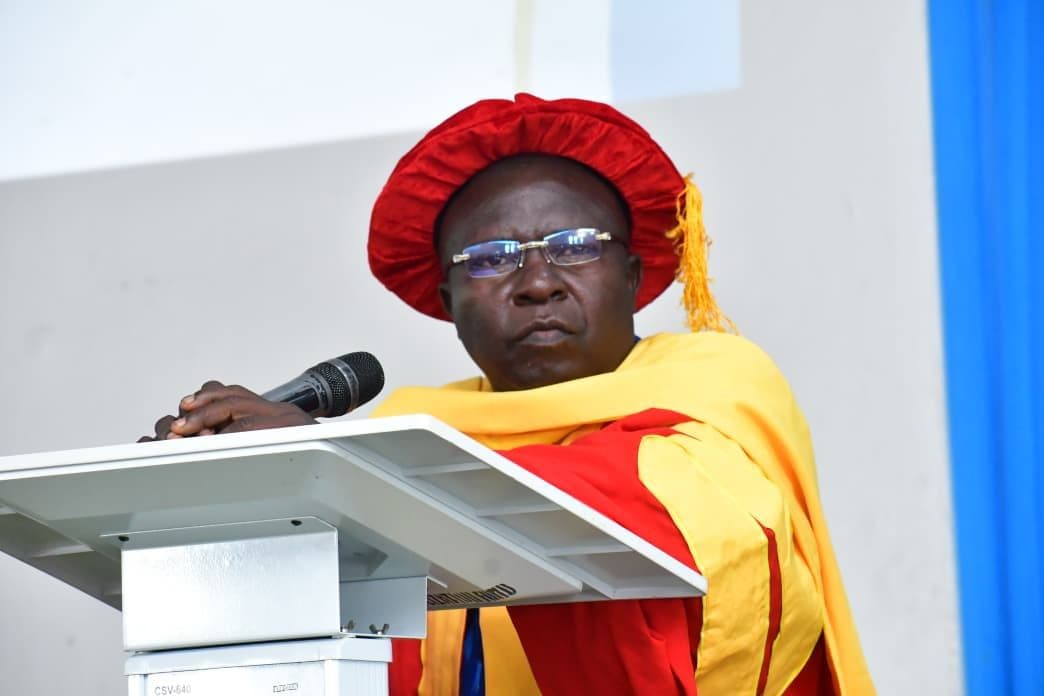
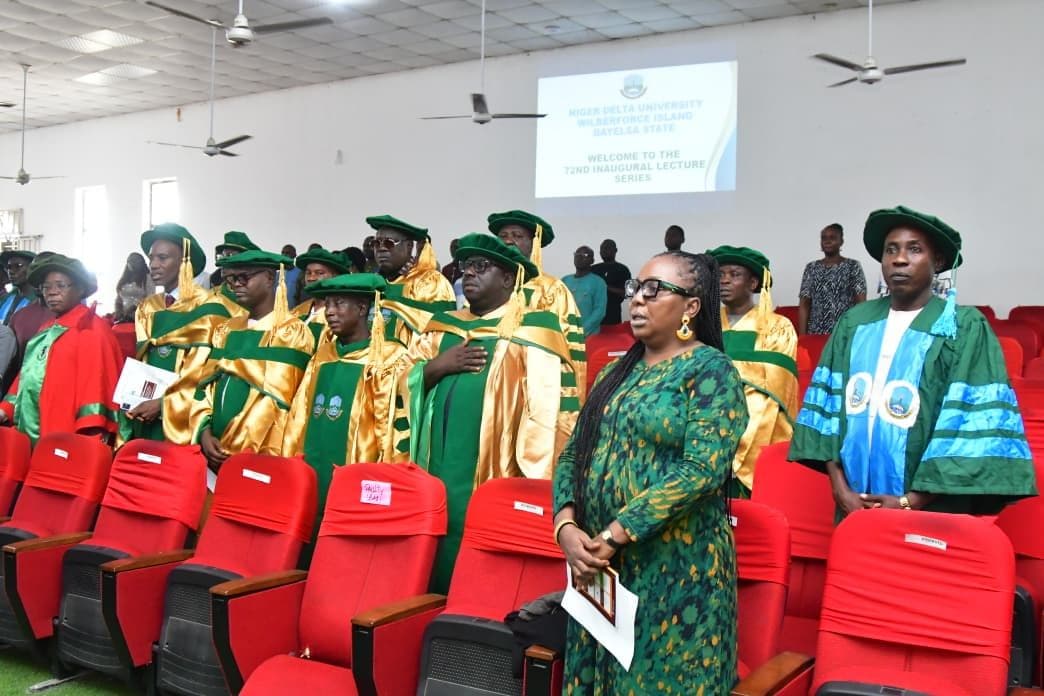
Niger Delta University gathered scholars, students, and guests today at the Main Auditorium, Gloryland Campus, for the 72nd Inaugural Lecture, with many more joining online via Zoom. The occasion marked another milestone in the university’s tradition of celebrating academic achievement and inviting public engagement on issues that matter to Nigeria’s development. This year’s lecture, delivered by Prof. Michael Baghebo, Professor of Economics, turned attention to one of the country’s most persistent questions: why does Nigeria’s wealth not translate into broad-based prosperity, and what framework can change that?
In his opening remarks, the Vice-Chancellor, Prof. Allen Aziba-Odumomsi Agih, welcomed the audience and underscored the significance of inaugural lectures as moments when professors present the culmination of years of research to the wider community. He noted that the topic chosen by Prof. Baghebo—Capital Accumulation, Decumulation, Anticumulation, Pirate Capitalism and the Mibalisation Modeling as Panacea to Nigeria’s Development Problems—speaks directly to the challenges facing the nation. The Vice-Chancellor expressed confidence that the lecture would stimulate robust discussion and generate ideas that can inform policy and practice in the Niger Delta and beyond, while thanking the Directorate of Academic Planning for organizing the event.
The lecture situates its argument within a framework called Mibalisation modeling. Prof. Baghebo argues that Nigeria’s development is constrained by four linked problems. Wealth often concentrates in ways that do not benefit the wider population, a pattern of accumulation without inclusion. At the same time, existing assets erode through corruption, inefficiency, and conflict, a process he terms decumulation. Resources also remain underutilized or wasted, reflecting anticumulation, while predatory forms of economic activity, described as pirate capitalism, extract wealth without regard for redistribution or environmental costs.
Mibalisation modeling responds by seeking a balance between accumulation and equity. It treats capital in a broader sense—financial, human, social, and natural—and insists that these forms of capital must circulate within inclusive local networks rather than leak to isolated elite interests or erode through mismanagement. The framework finds its strength in linking national strategies to grassroots action. Community cooperatives and social enterprises, for example, mobilize savings and credit, keep wealth circulating locally, and build accountability that resists predatory extraction. Locally managed schools that adapt curricula to indigenous knowledge and promote gender inclusion strengthen human capital and participation in governance. In environmentally sensitive areas, community-led conservation and reforestation protect ecosystems while creating alternative livelihoods, tying economic activity to ecological health. Across these initiatives, participatory governance through assemblies and peer monitoring helps reduce mismanagement and builds a culture of stewardship.
The viability of this approach is illustrated in practice. The Ogbomoso Agro-Processing Cooperative brought farmers together to pool resources, increase incomes, create jobs, and reinvest profits in community projects, preventing capital leakage. In Cross River State, indigenous communities combined customary law with conservation to manage forests sustainably, generating income through eco-tourism and non-timber products while preserving biodiversity.
The central message is that sustainable development in Nigeria depends on connecting macro-level frameworks to micro-level realities. When communities own and reinvest financial, human, social, and natural capital, development becomes resilient, inclusive, and resistant to exploitation. Mibalisation modeling offers that pathway, turning the country’s abundant natural wealth into shared prosperity.
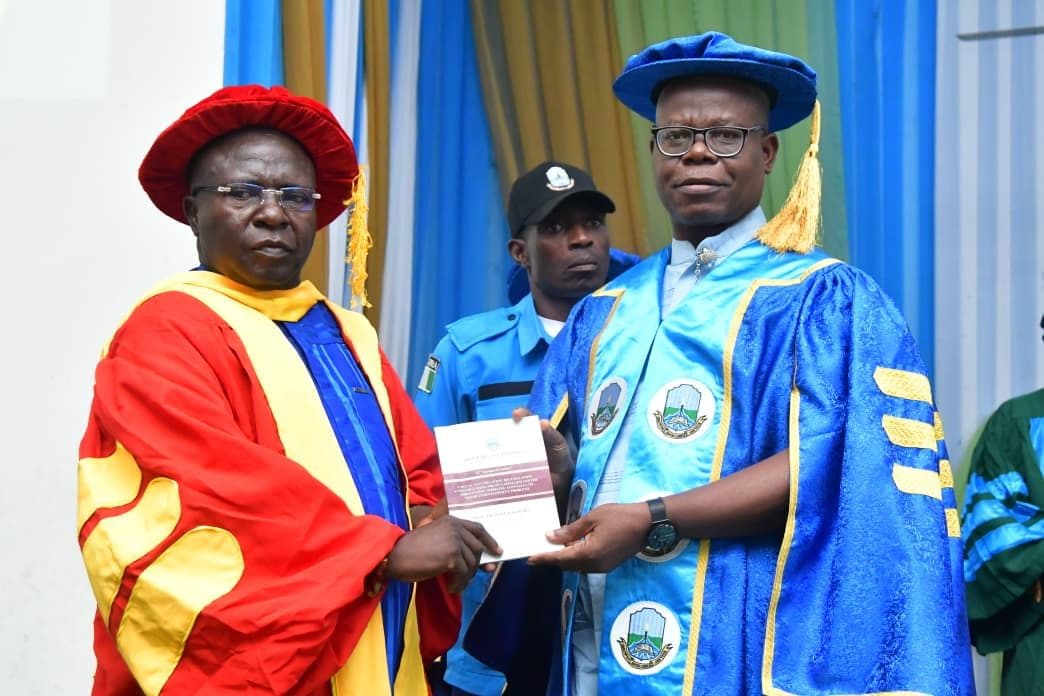
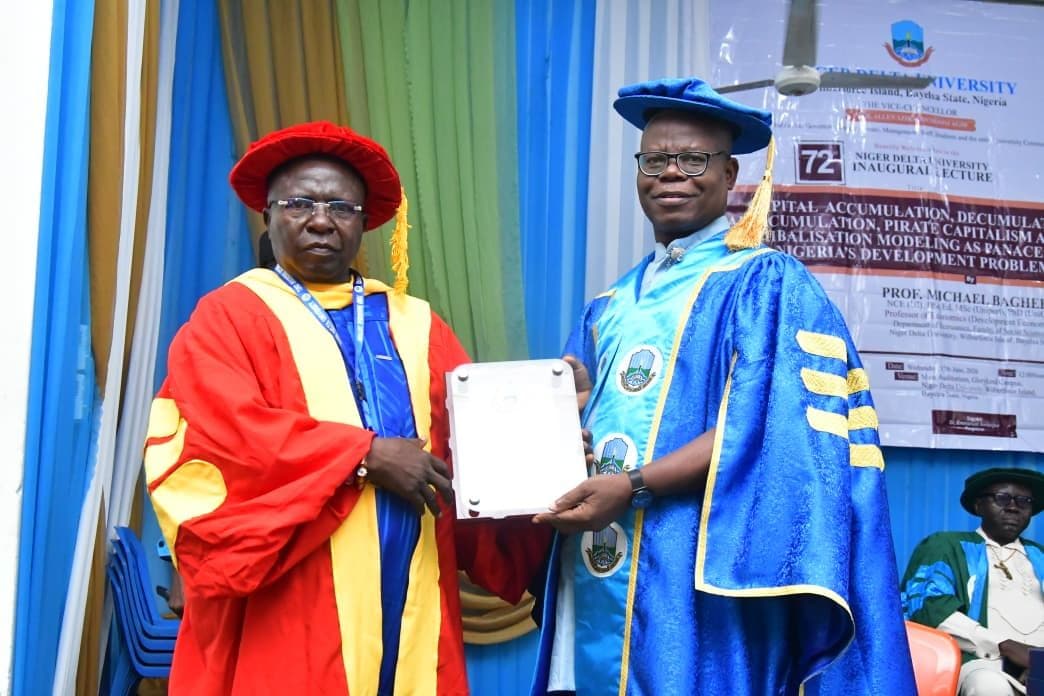
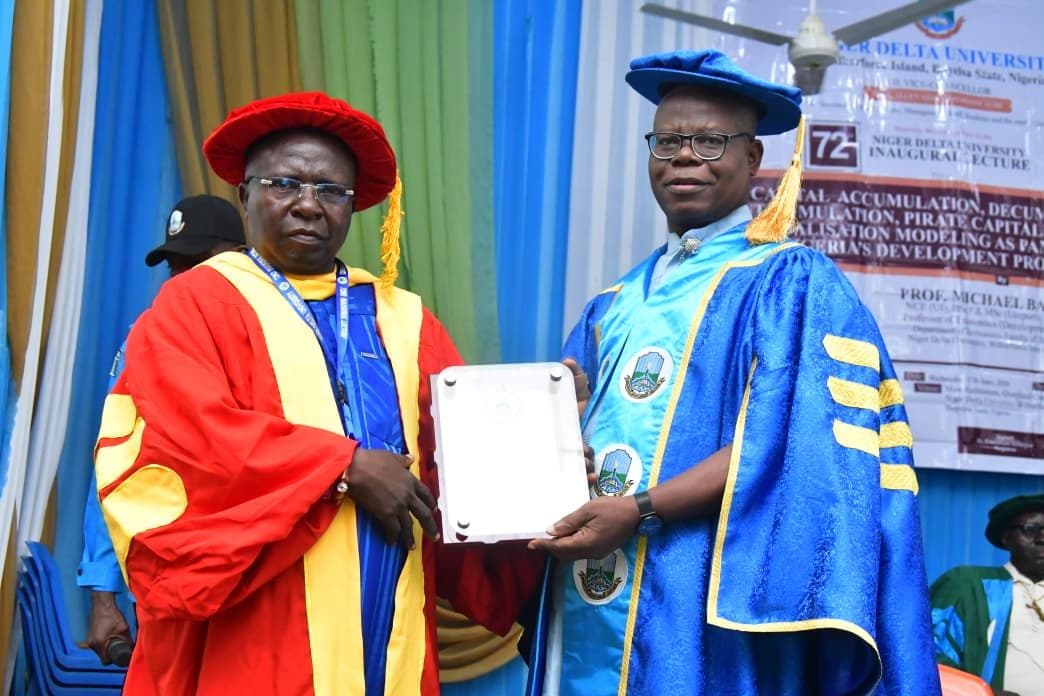
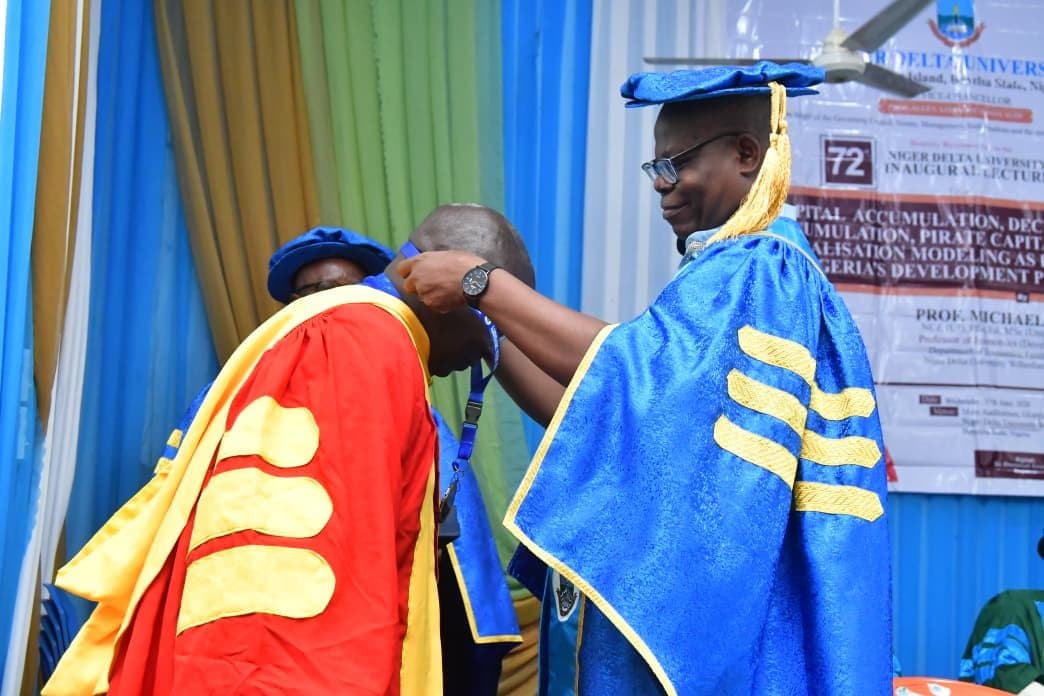
The climax of the event came with the formal decoration of Prof. Michael Baghebo as the 72nd Inaugural Lecturer of Niger Delta University. The Vice-Chancellor, Prof. Allen A. Agih, conferred the honor before a gathering of colleagues, students, and guests, marking both the recognition of Prof. Baghebo’s contribution to scholarship and the university’s commitment to advancing knowledge that speaks to national needs.