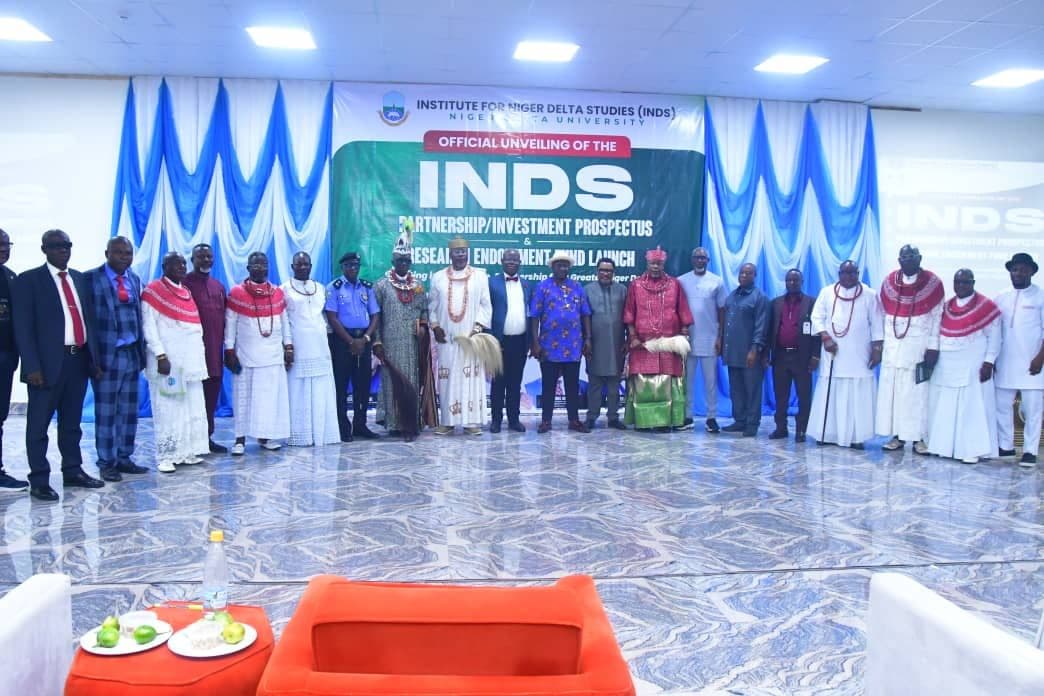
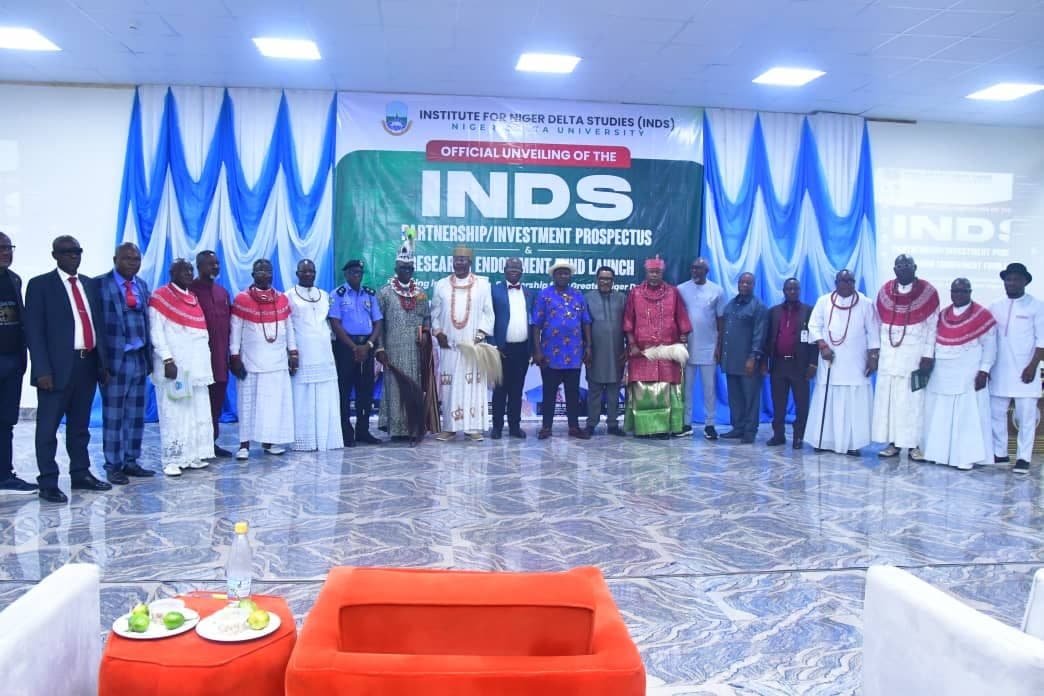
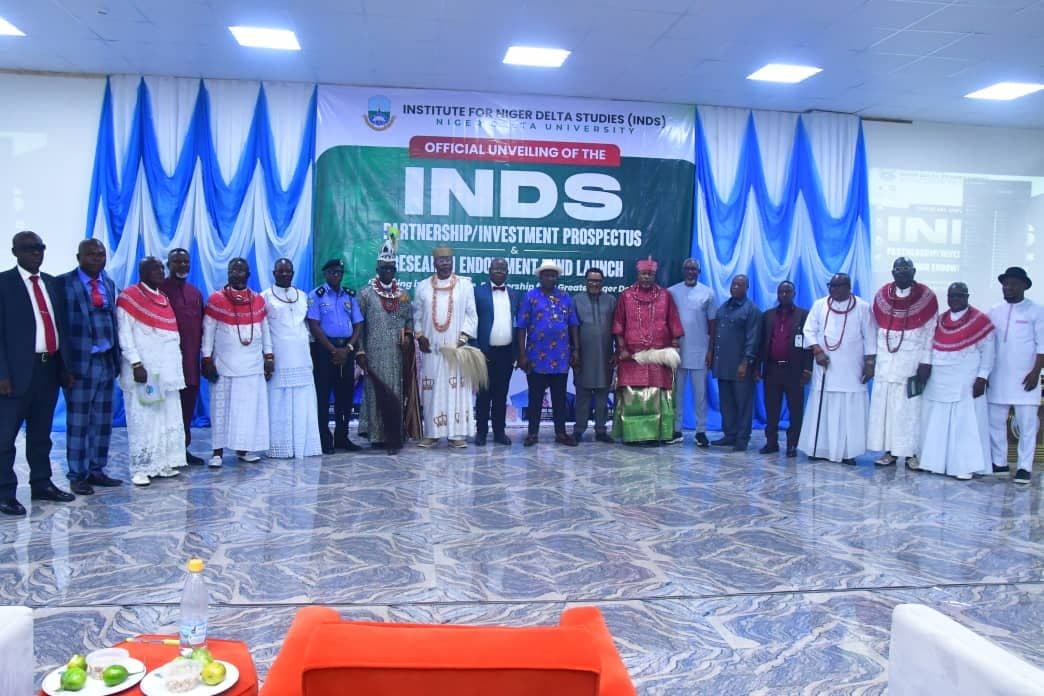
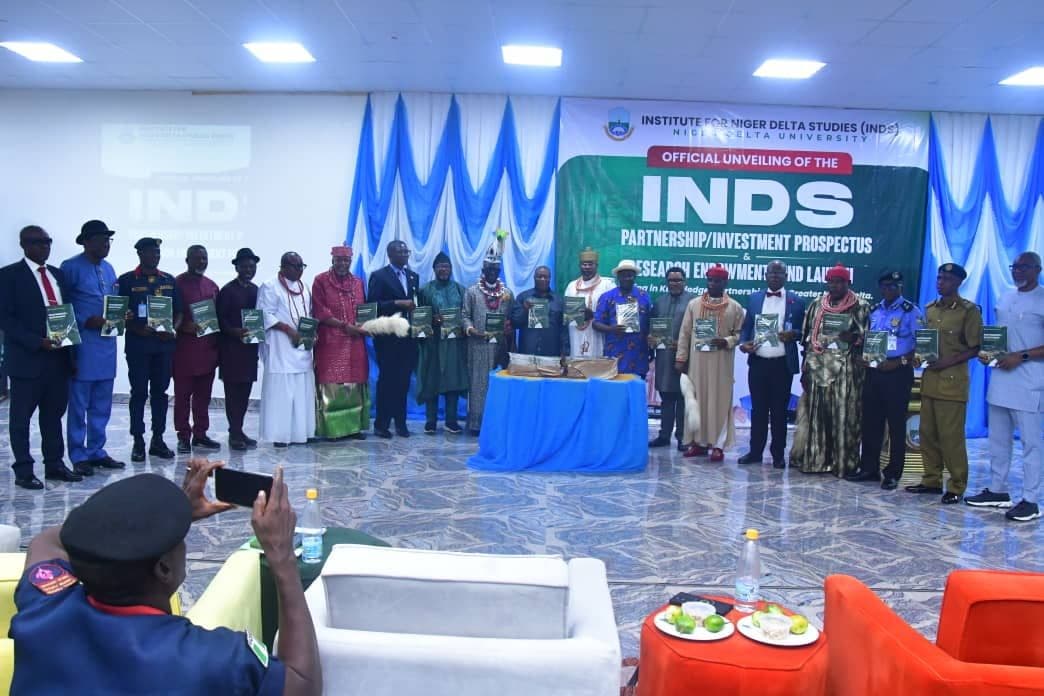
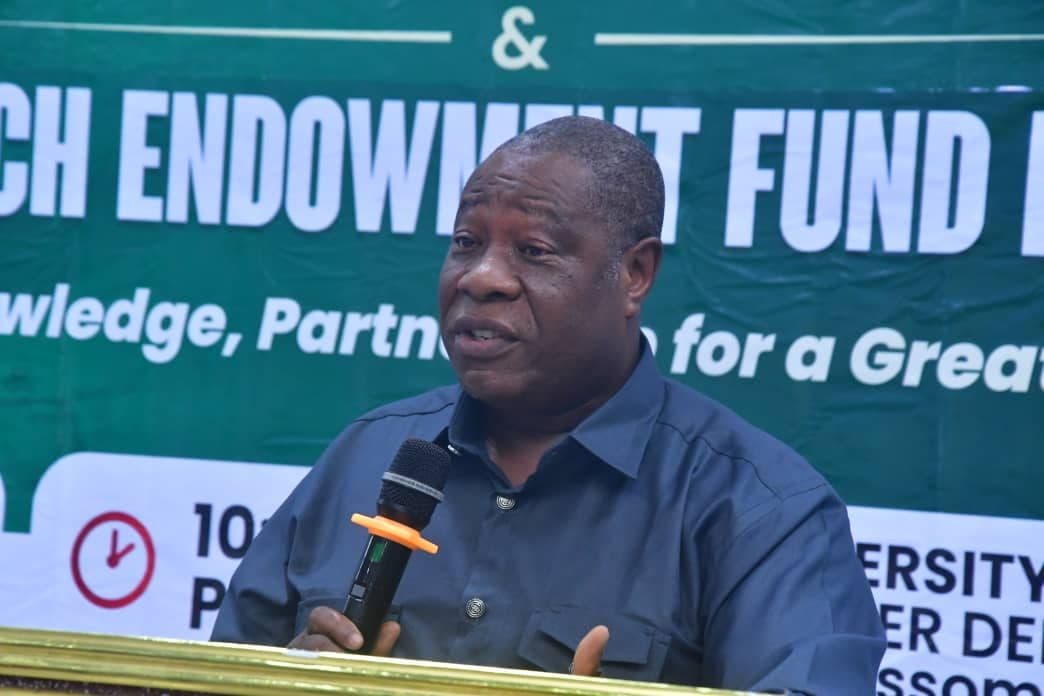
Niger Delta University (NDU), Wilberforce Island, Bayelsa State, has unveiled the Partnership and Investment Prospectus of the Institute of Niger Delta Studies (INDS) and launched its Research and Development Endowment Fund, marking a significant step in the University’s drive to strengthen research, innovation, strategic partnerships and sustainable development in the Niger Delta.
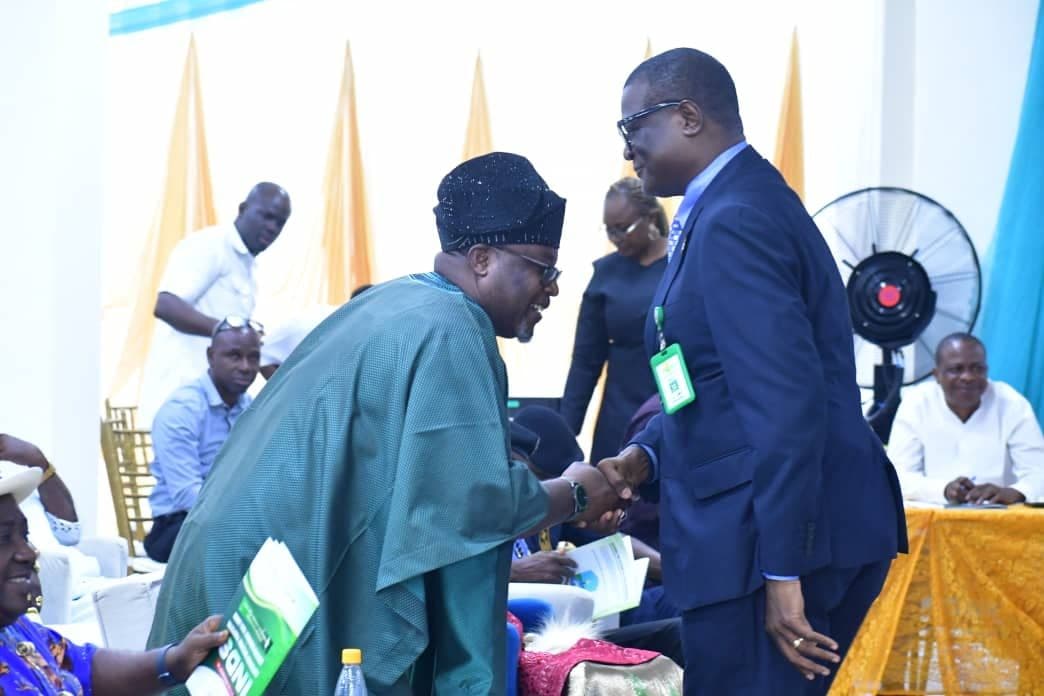
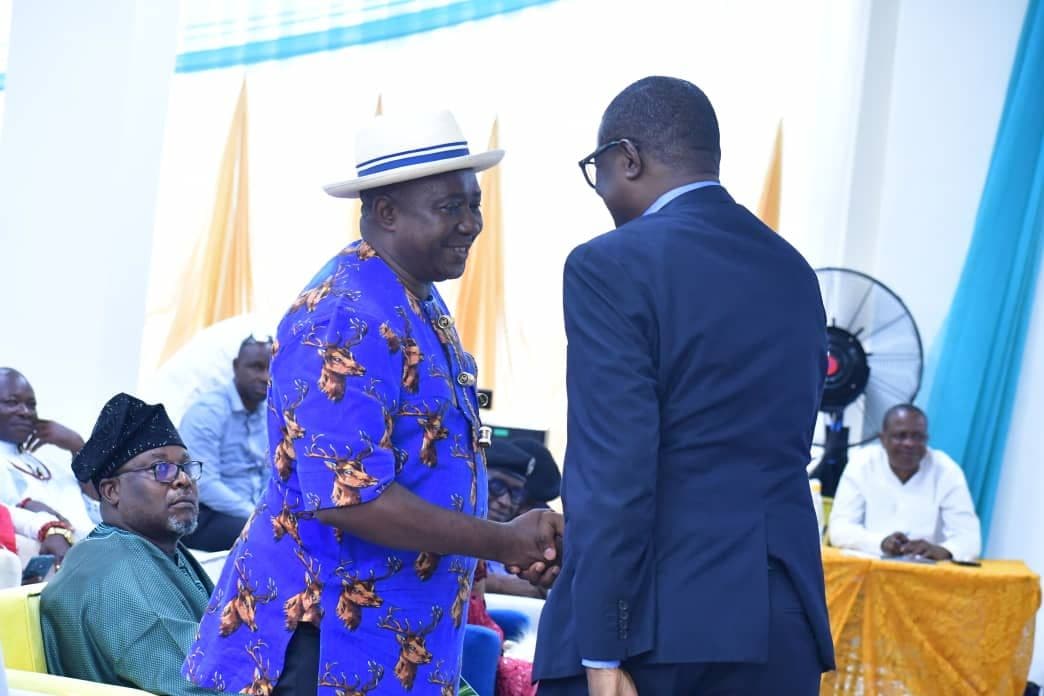
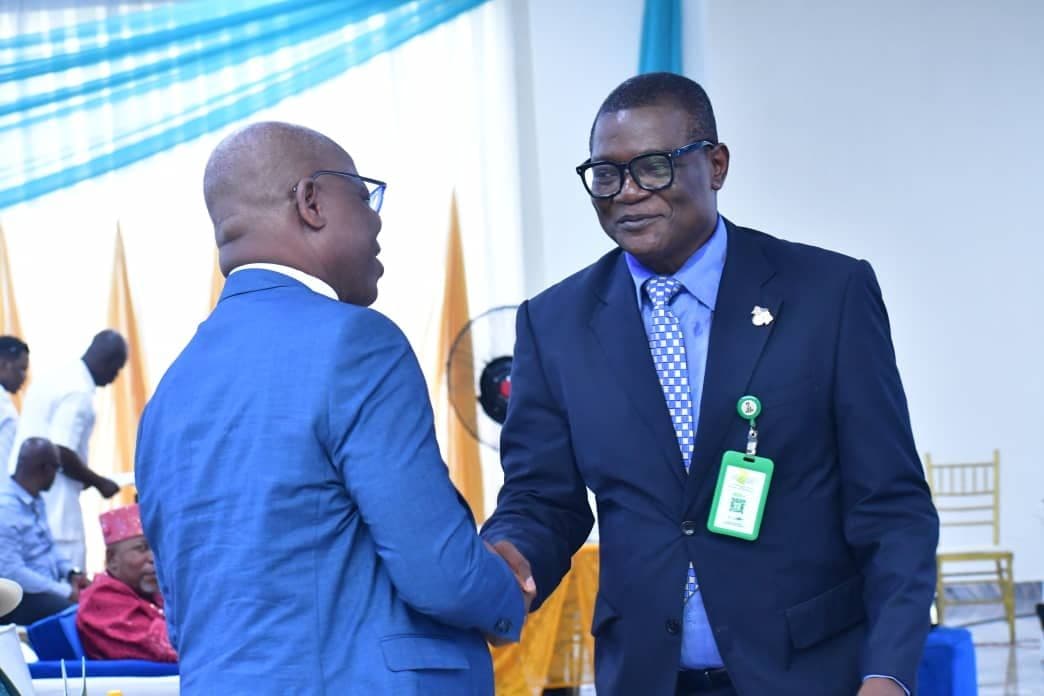
The ceremony, held on Thursday, 24 September 2026, at the University’s E-Library, brought together representatives of government, traditional institutions, academia, security agencies, the private sector, development organizations and other stakeholders committed to the advancement of the Niger Delta.
Among the Dignitaries included Prof. Bolaji Bernard Babatunde (representing Secretary to Government of Federation, Senator George Akume); Dr. Emeka Ahiazu (representing Governor Alex Otti of Abia State); Dr. Gentle Emelah (representing Governor Douye Diri of Bayelsa State); Dr. Peters Nwagor ( representing Governor Siminalayi Fubara of Rivers State); HRM King Bubaraye Dakolo, Agada IV, Ibenanaowei of Ekpetiama Kingdom, and Chairman of Bayelsa State Traditional Council; HRM King Oboro Gbaran II, Pere of Gbaramatu Kingdom, and Chairman of Advisory Council of the Institute of Niger Delta Studies;Chief Godspower Gbenekama (representing the Chief Launcher, Chief Government Oweizide Ekpemupolo, popularly known as Tompolo); Dr. Michael Amaegberi, and Executive Secretary, Bayelsa State Higher Education Students’ Loans Board, among others.
In his opening address, the Vice Chancellor of Niger Delta University, Professor Allen A. Agih, welcomed the distinguished guests and described the unveiling of the INDS Partnership and Investment Prospectus as an important milestone in the University’s commitment to research, knowledge production and regional development. Professor Agih explained that the Institute provides a platform for meaningful collaboration among the University, government, communities, private organizations, development partners and other stakeholders. He emphasized the importance of research that responds directly to the complex environmental, economic, social and developmental challenges confronting the Niger Delta.
According to the Vice Chancellor, the initiative reflects the University’s broader commitment to ensuring that academic scholarship extends beyond the classroom and contributes to practical solutions to challenges affecting communities within the Niger Delta and beyond.
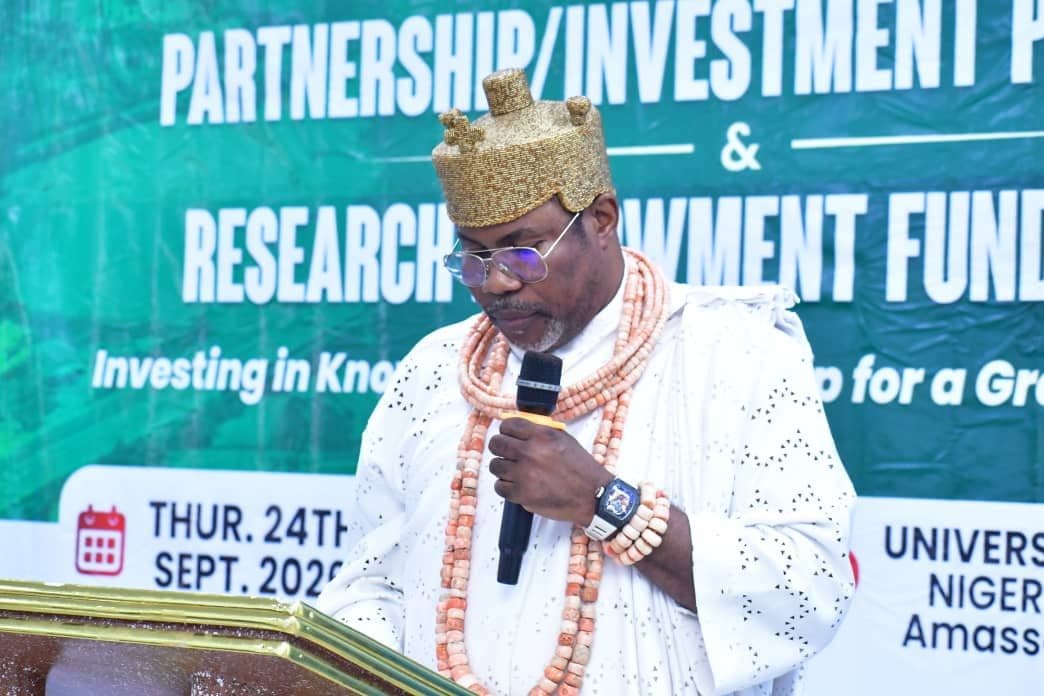
The Chairman of the occasion, His Royal Majesty, King Bubaraye Dakolo, Agada IV, Chairman of the Bayelsa State Council of Traditional Rulers, commended Niger Delta University for the initiative and stressed the importance of sustained collaboration among traditional institutions, government, academia, communities and development partners.
He called for continuous research and community engagement in addressing the challenges of the Niger Delta, while highlighting the responsibility of stakeholders to preserve the region’s history, culture, indigenous knowledge and heritage as part of efforts towards sustainable development.
Delivering the keynote address, Prof. Bolaji Bernard Babatunde, representing the Secretary to the Government of the Federation, Senator George Akume, drew attention to the extensive human, environmental and maritime resources of the Niger Delta. He stressed the need to explore the region’s potential beyond its traditional dependence on oil and gas, identifying opportunities in the blue economy, environmental restoration, renewable energy, sustainable agriculture, aquaculture, public health, entrepreneurship and digital knowledge systems. Prof. Bolaji Bernard Babatunde, further underscored the importance of research-driven policies and innovations that respond to the peculiar realities of the Niger Delta and contribute to improving the quality of life of its people.
He also emphasized the need to document and preserve the region’s cultural heritage and indigenous knowledge, noting that INDS has an important role to play in promoting the history, culture, indigenous languages and knowledge systems of the Niger Delta through research, advocacy and capacity building.
In his address, Dr Wisdom described the occasion as an important step towards repositioning research and knowledge production as practical instruments for regional development. He explained that the Partnership and Investment Prospectus provides a framework for attracting partnerships and investments into research addressing the environmental, economic, social, cultural and developmental challenges of the Niger Delta. The Institute’s research agenda is anchored on five priority areas: Environmental Sustainability and Remediation; Blue Economy and Maritime Studies; Security, Peace and Intelligence Studies; Public Health and Human Capital Development; and Renewable Energy and Sustainable Livelihoods. These areas are designed to promote interdisciplinary research, generate reliable data, inform public policy, encourage innovation, strengthen community development and advance sustainable livelihoods across the Niger Delta.
A major highlight of the ceremony was the formal unveiling of the INDS Partnership and Investment Prospectus by Prof. Ebimieowei Etebu, Executive Secretary, Bayelsa State Education Development Trust Fund. The unveiling represents a significant stage in the development of the Institute, reflecting its evolution from its earlier identity as the Centre for Niger Delta Studies into a broader institutional platform for research, advocacy, partnership and knowledge exchange.
According to Professor Stephen Olali, The Prospectus identifies a wide range of research interests, including indigenous knowledge and languages, cultural heritage, politics and governance, natural resources, agriculture and aquaculture, ecosystem restoration, environmental governance, renewable energy, entrepreneurship and digital knowledge systems. It is expected to serve as a strategic framework for attracting partnerships and investments to support research and development initiatives relevant to the Niger Delta.
Stakeholders at the ceremony expressed support for the vision and objectives of the Institute. Chief Godspower Gbenekama, T.D.A. (JP), representing High Chief Government Oweizide Ekpemupolo, offered support for the Institute’s vision and its proposed role in strengthening collaboration among the University, government, communities and development partners.
Representing the Bayelsa State Government, the Commissioner for Education, Dr Gentle Emelah, announced an annual contribution of Five Million Naira (₦5 million) towards supporting the activities of the Institute. The commitment, he stated, was intended to provide sustained institutional support for the Institute’s research and development programs. Representatives of the Rivers and Abia State Governments also expressed support for the initiative, highlighting the importance of inter-state collaboration in developing research-based responses to challenges that cut across the Niger Delta.
The Chairman of the INDS Advisory Council, His Royal Majesty, King Oboro Gbaran II, Pere of Gbaramatu Kingdom, described the intellectual capacity of the people of the Niger Delta as one of the region’s most enduring resources. He stressed that sustainable development must be driven by credible data and research and presented the Research and Development Endowment Fund as a strategic investment in the future of the region. He called on state governments, the oil and gas industry, maritime organizations, international development partners and other stakeholders to support research in areas such as environmental remediation, the blue economy, conflict resolution and youth empowerment. He also emphasized the importance of transparency and accountability in the management of the Fund, noting that its ultimate objective should be to generate actionable research, inform policy and contribute to lasting peace and prosperity in the Niger Delta.
The newly introduced Research and Development Endowment Fund is designed as a long-term mechanism for mobilizing resources to support research and academic development at the Institute. The Fund is expected to support scholarships, fellowships, research grants, field studies, publications, laboratories, digital infrastructure, community-based projects and initiatives focused on preserving the cultural and environmental heritage of the Niger Delta. It is also expected to create opportunities for researchers and young scholars to undertake studies with practical relevance to the development of the region.
Through the Partnership and Investment Prospectus and the Research and Development Endowment Fund, the Institute of Niger Delta Studies seeks to establish a sustainable framework for collaboration between Niger Delta University and its partners while strengthening research capacity and creating opportunities for knowledge-driven development.
The initiative is expected to contribute to the generation of relevant research, the establishment of strategic partnerships, the development of opportunities for young scholars and the production of practical solutions to some of the region’s most pressing challenges. The launch therefore represents not only an institutional milestone for Niger Delta University but also a renewed commitment to positioning research, indigenous knowledge, innovation and collaboration at the center of sustainable development in the Niger Delta.