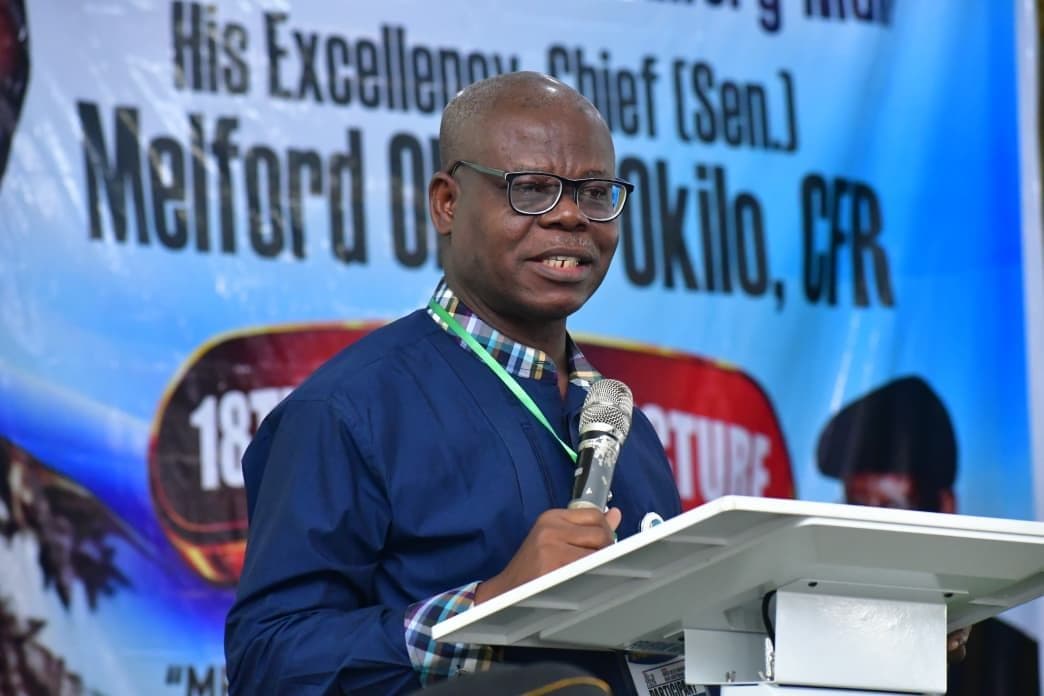
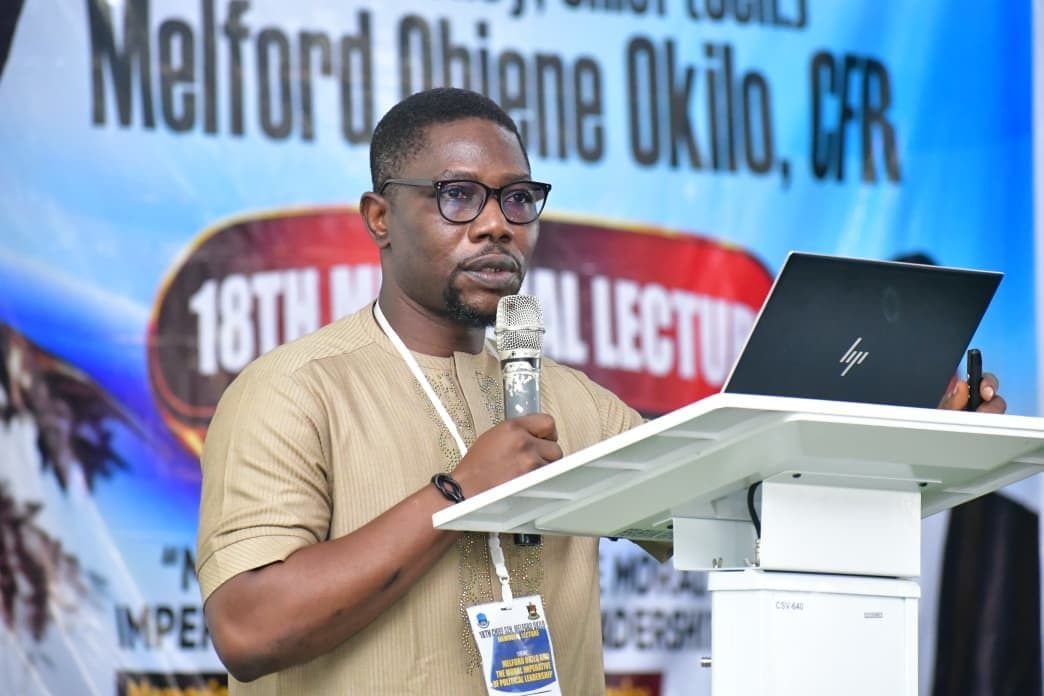
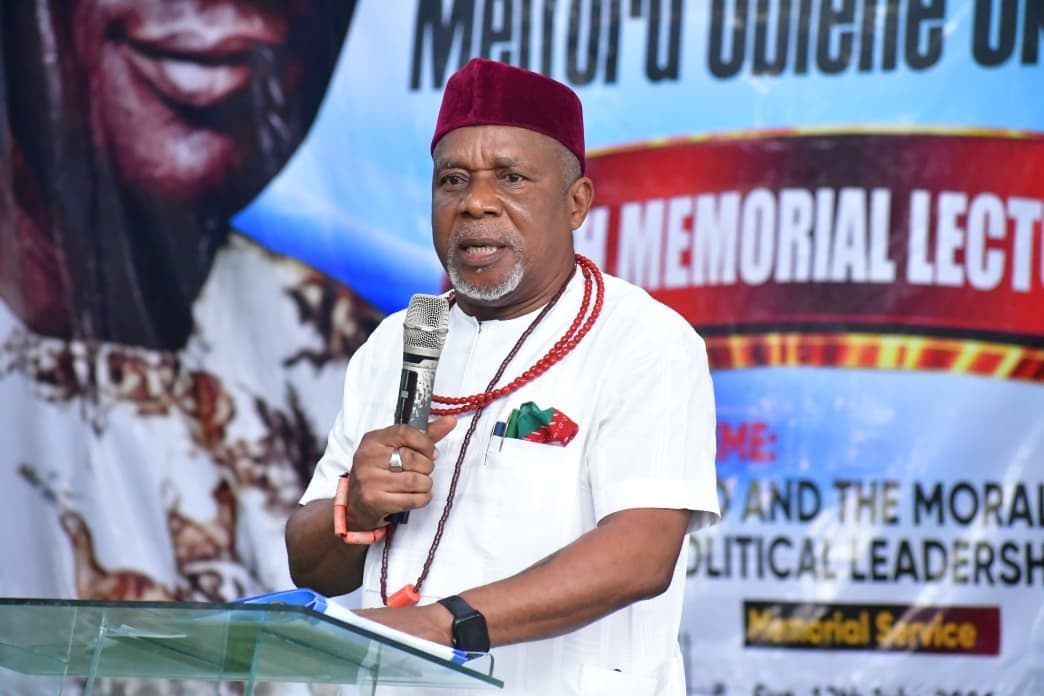
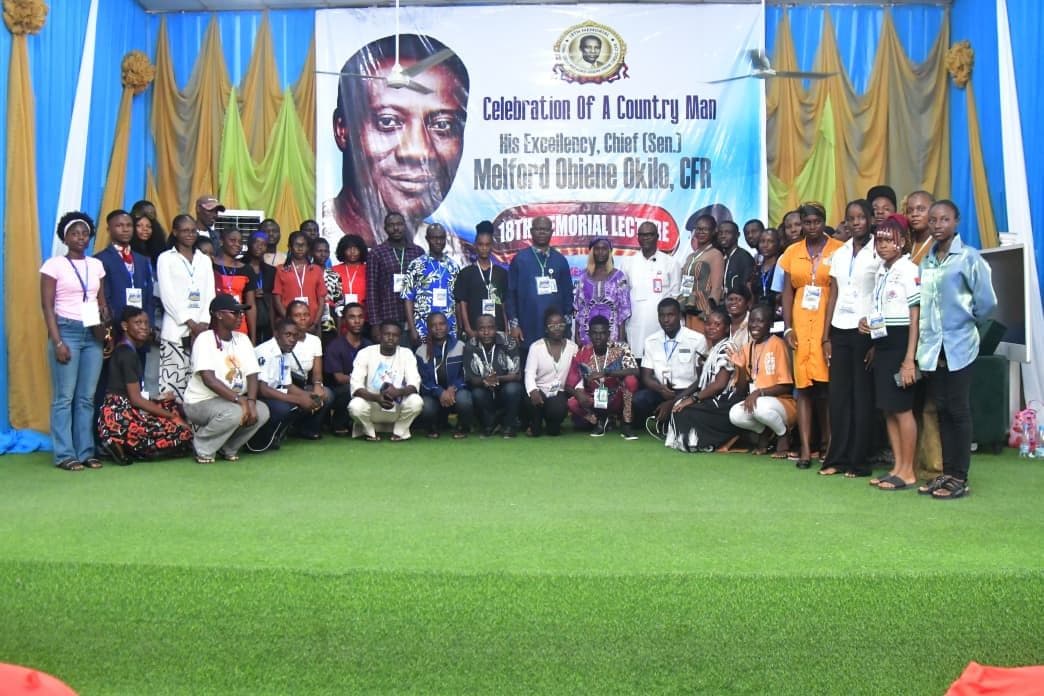
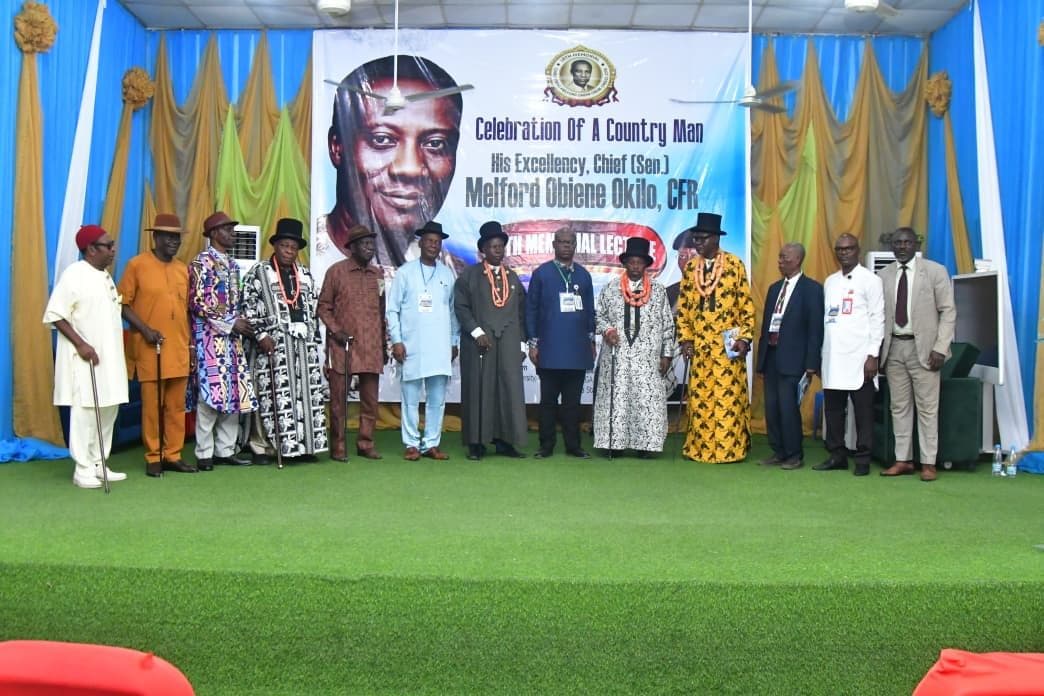
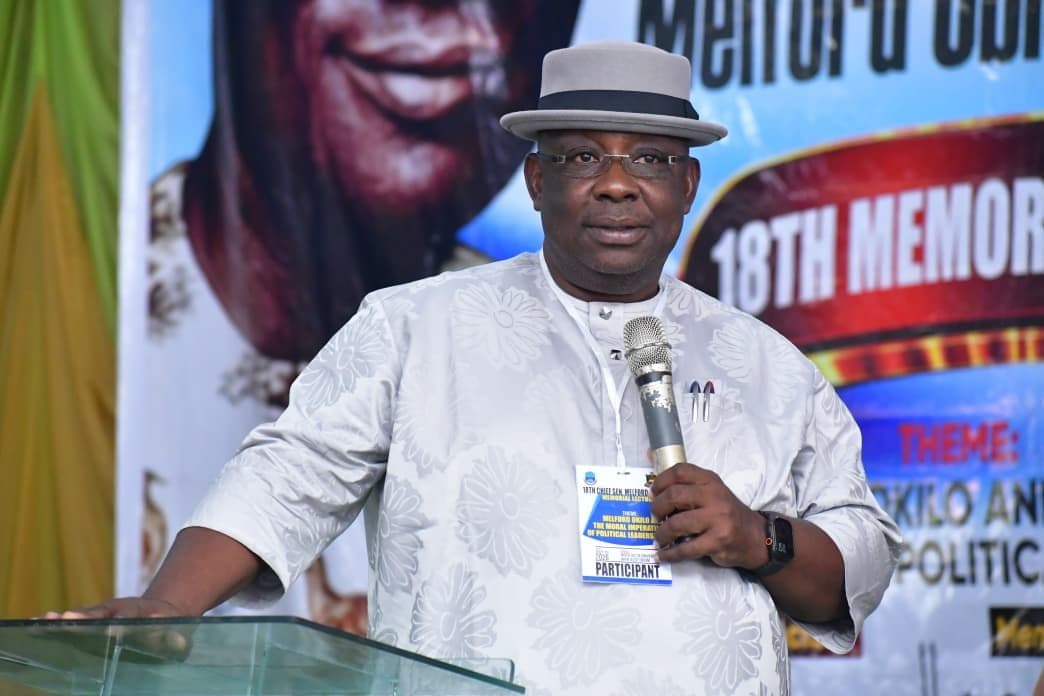
The Institute for Niger Delta Studies (INDS), Niger Delta University (NDU), in collaboration with the Bayelsa State Government, successfully hosted the 18th Chief (Sen.) Melford Obiene Okilo, CFR Memorial Lecture on Friday, July 10, 2026, at the University's Main Campus Auditorium, Wilberforce Island.
The lecture, themed "Melford Okilo and the Moral Imperative of Sustainable Political Leadership," attracted academics, government officials, traditional rulers, students, and members of the public who gathered to reflect on the enduring legacy of the late elder statesman and first civilian Governor of the old Rivers State.
The occasion was chaired by Professor Teddy Adias, former Vice Chancellor of the Federal University Otuoke, while the Vice Chancellor of Niger Delta University, Professor Allen A. Agih, served as Chief Host. The Acting Director of the Institute for Niger Delta Studies, Dr. Wisdom Selekekeme Krokeyi, welcomed guests and emphasized the importance of preserving the ideals of exemplary leaders through scholarship and public discourse.
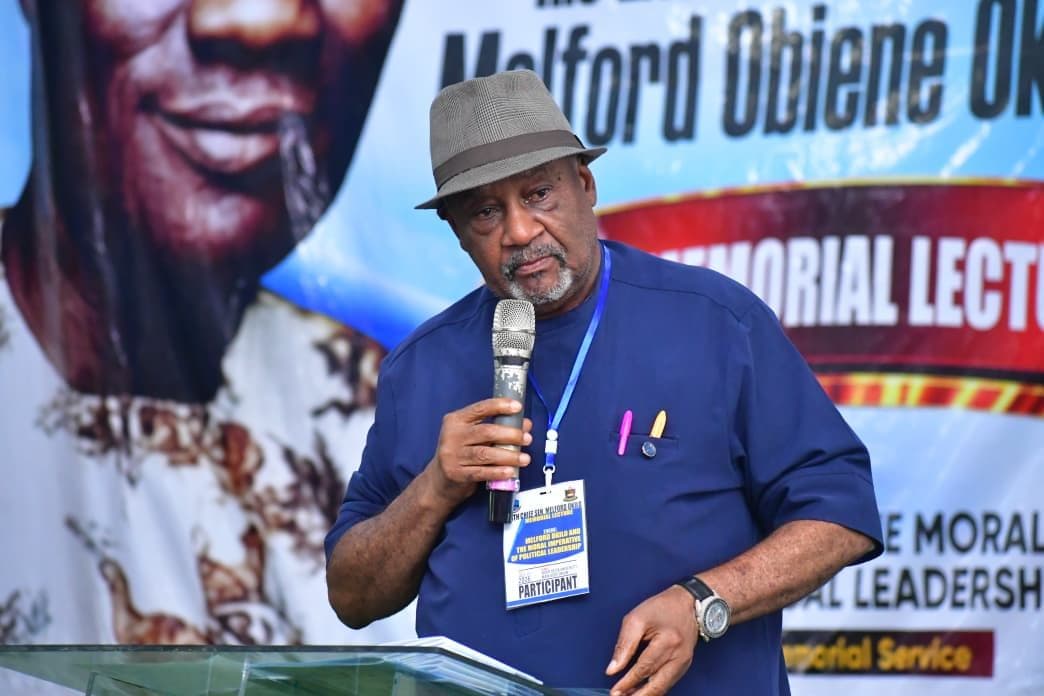
Delivering the keynote lecture, Professor Lasisi Raimi of the Department of Sociology and Anthropology, Federal University Otuoke, examined the life, philosophy, and leadership ideals of Chief Melford Obiene Okilo, describing him as a visionary statesman whose unwavering commitment to justice, integrity, selfless service, and the common good remains a timeless model for political leadership.
Professor Raimi argued that Chief Okilo viewed leadership as a moral responsibility rather than an avenue for personal enrichment. He noted that the late statesman's philosophy was rooted in character, accountability, and ethical governance, insisting that sustainable political leadership can only flourish when public office is seen as a platform for service and stewardship.
Drawing lessons from Chief Okilo's administration, the keynote speaker highlighted landmark achievements in education, healthcare, infrastructure, rural development, electricity, potable water, and the establishment of Rivers State University of Science and Technology, stressing that these initiatives reflected a leadership style driven by vision, service, and long-term societal development.
He further challenged contemporary leaders to distinguish between politics and statesmanship, emphasizing that while politicians often seek power for personal gain, true statesmen view leadership as a trust that must benefit both present and future generations. According to him, the greatest tribute to Chief Okilo's memory would be the institutionalization of character-driven leadership anchored on truth, justice, and accountability.
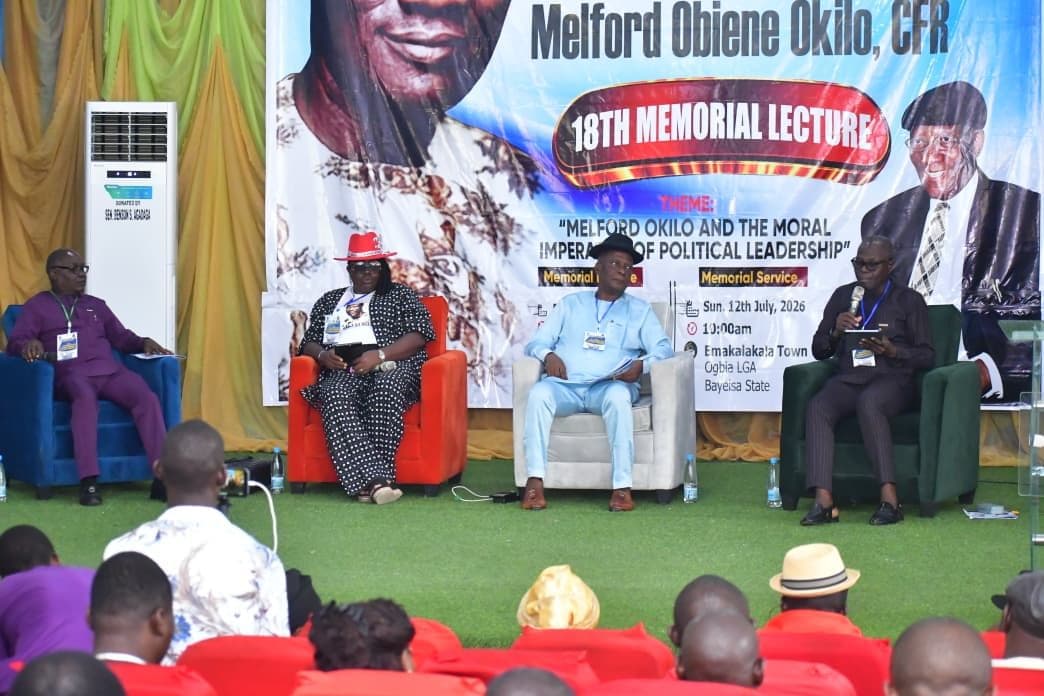
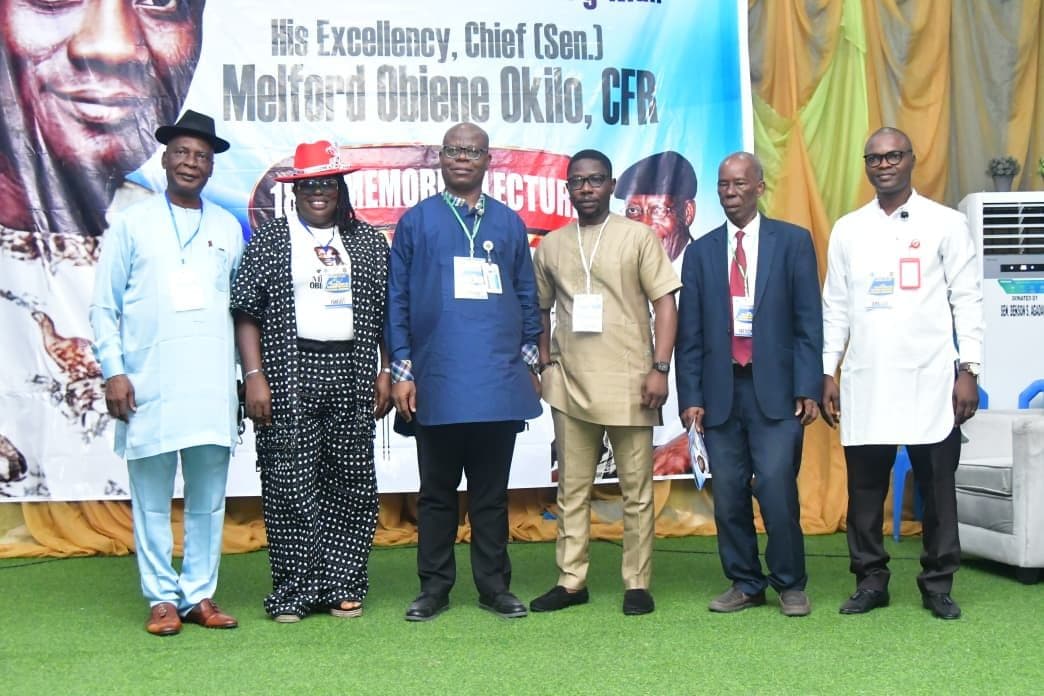
A major highlight of the programm was the panel discussion featuring Professor Barclays Foubiri Ayakoroma, former Deputy Vice Chancellor, University of Africa, Toru-Orua, and Member of the Niger Delta University Governing Council; Professor Hamilton Ekeke; and Professor Odingowei Kwokwo, with Professor Meeting M. Andawei serving as moderator. The panelists further explored the relevance of Chief Okilo's leadership philosophy to contemporary governance and national development.
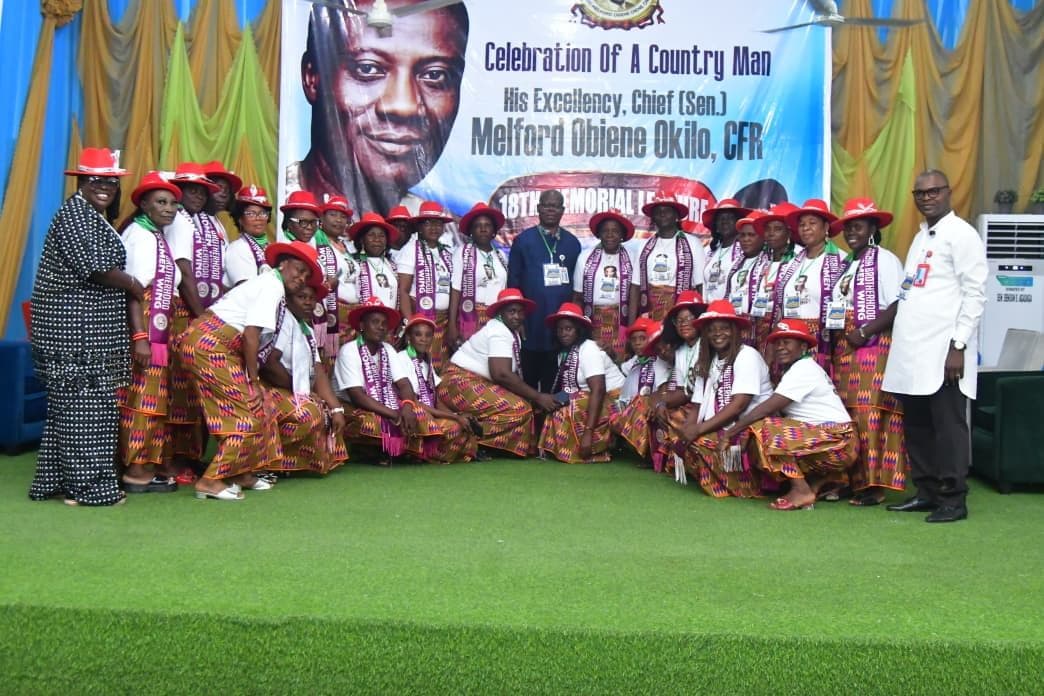
Among the distinguished personalities in attendance were Professor Humphrey Ogoni, former Vice Chancellor of Niger Delta University; His Eminence, King Dumaro Charles Owaba, Obanobhan III of Ogbia Kingdom and Second Vice Chairman of the Bayelsa State Council of Traditional Rulers; and Dr. Ebike Jones, Honourable Commissioner for Trade, Industry and Investment, who represented the Speaker of the Bayelsa State House of Assembly, Rt. Hon. Abraham Ingobere. Also present were members of the University Management, Governing Council, staff, students, traditional rulers, scholars, and invited guests.
The memorial lecture concluded with a renewed call for leaders at all levels to embrace integrity, selflessness, and visionary governance, reaffirming Niger Delta University's commitment to promoting scholarship, preserving the legacies of outstanding leaders, and advancing conversations on ethical leadership, good governance, and sustainable development in the Niger Delta and Nigeria at large.