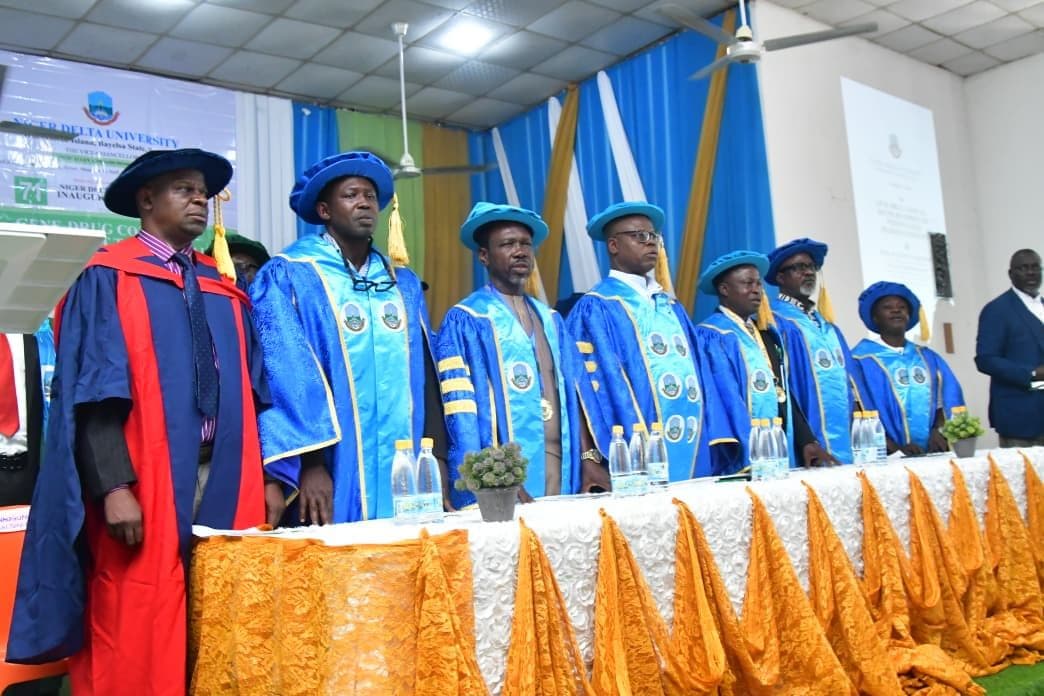
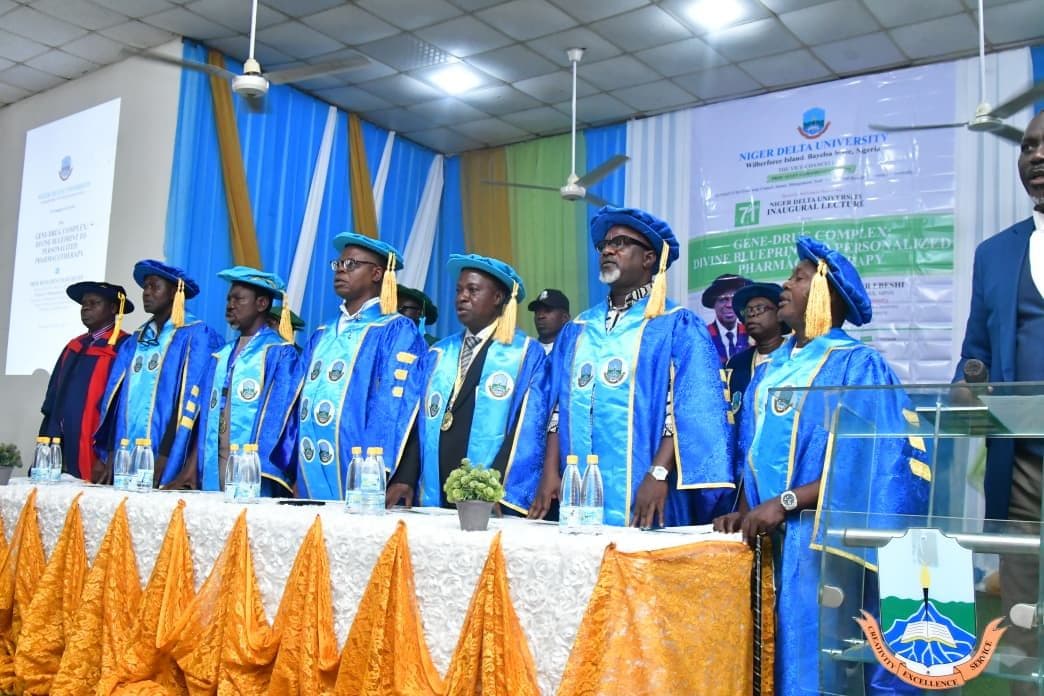
Niger Delta University, Wilberforce Island, Bayelsa State, on Wednesday, May 20, 2026, held its 71st Inaugural Lecture delivered by Professor Benjamin Umar Ebeshi, titled “Pharmacogenetics and the Nigerian Patient: Building Our Own Data for Safer Drug Therapy.”
Delivering the lecture, Professor Ebeshi emphasized the urgent need for Nigerian and African-specific pharmacogenetic data to improve drug safety, effectiveness, and healthcare outcomes for patients within the region. According to him, most modern drugs are developed and dosed using data obtained largely from European and North American populations, leaving Africans underrepresented in global drug research and clinical trials.
The Professor explained that his research focuses on pharmacogenetics, the study of how genetic differences influence individual responses to drugs. He highlighted the role of cytochrome P450 enzymes, particularly CYP2C19, CYP2C9, and CYP2D6 genes, which are responsible for metabolizing commonly used drugs such as antidepressants, anticoagulants, anticonvulsants, antihypertensives, and pain medications.
Professor Ebeshi noted that variations in these genes among Nigerians could result in poor drug response, treatment failure, or drug toxicity if standard foreign dosage guidelines are applied indiscriminately. He explained that poor metabolizers may accumulate toxic levels of certain drugs, while ultra-rapid metabolizers may clear drugs too quickly for effective treatment. The lecturer also discussed the NAT2 gene, which he described as one of the earliest discoveries in pharmacogenetics linked to the treatment of tuberculosis with isoniazid. According to him, slow acetylators face increased risks of liver damage and neuropathy, while fast acetylators may experience treatment failure due to rapid drug clearance.
Drawing attention to environmental health concerns within the Niger Delta region, Professor Ebeshi further explained the importance of Glutathione S-transferase (GST) genes involved in detoxification processes. He revealed that his research discovered that a significant number of Nigerians possess non-functional GST genes, potentially reducing their ability to detoxify hydrocarbons and environmental pollutants prevalent in oil-producing communities, thereby increasing susceptibility to cancers and toxin-related diseases.
Professor Ebeshi stated that findings from his research and those of his postgraduate students have contributed to the development of a Nigerian subset within a broader African pharmacogenetics database, with published data now accessible through internationally recognized journals, including Nature Journal of Human Genetics. He stressed that the development would encourage more inclusive clinical trials and support safer drug prescriptions tailored to African populations.
The inaugural lecturer maintained that the research holds significant implications for safer prescribing practices, improved pharmaceutical research, and public health policy development in Nigeria, particularly in addressing environmental health challenges within the Niger Delta region.
During the lecture, Professor Ebeshi expressed gratitude to God, his family, mentors, colleagues, students, and the management of Niger Delta University for their support throughout his academic journey. He specially acknowledged his wife, Dr. Mrs. Elizabeth Ebeshi, for her support during his years of research and academic development.
The event attracted members of the university community, researchers, healthcare professionals, traditional rulers, representatives of professional bodies, and invited guests from various institutions across the country.
Highpoint of the ceremony was the presentation of the University’s Award of Excellence to Professor Benjamin Umar Ebeshi in recognition of delivering the 71st Inaugural Lecture, as well as the formal signing of the university’s inaugural lecture register.