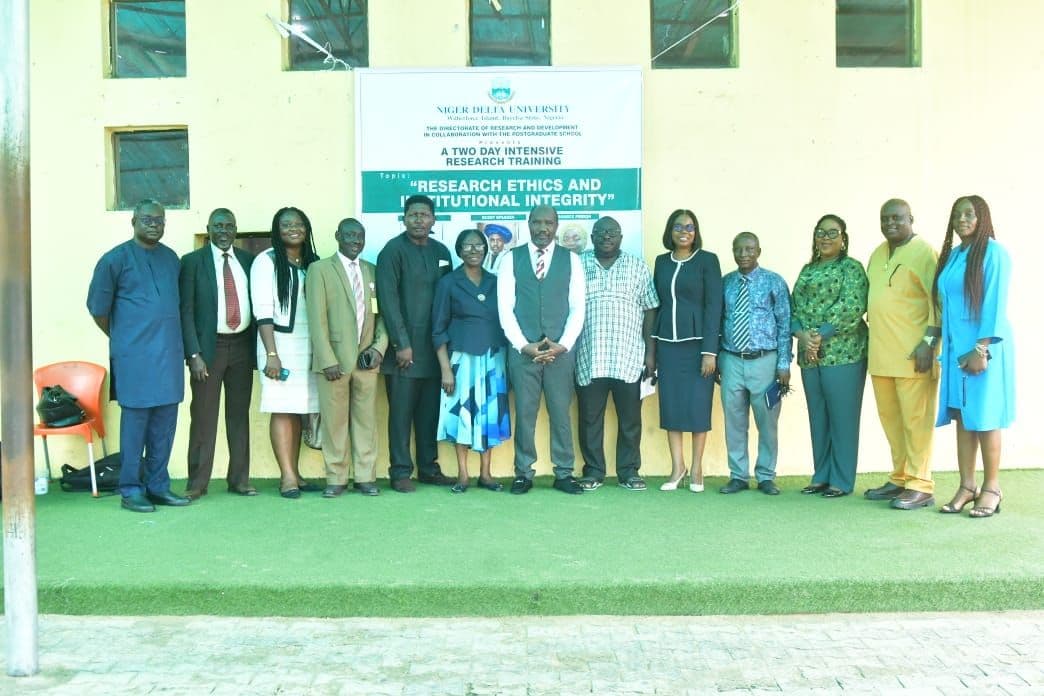
The Directorate of Research and Development, in collaboration with the Postgraduate School of the Niger Delta University, on Monday, July 20, commenced a two-day intensive training program on Research Ethics and Institutional Integrity at the Main Auditorium, Gloryland Campus.
The program brought together academic staff, postgraduate students, and early career researchers to strengthen ethical research practices and promote a culture of integrity in teaching, learning, and research.
Declaring the program open, Professor Mirabeau Y. Tatfeng, Provost of the Postgraduate School, expressed appreciation to the Director, Dr. Lucky Bebeteidoh, the organizers, sister directorates, and resource persons for their efforts in putting the training together.
The Vice Chancellor of Bayelsa Medical University and Guest Speaker, Professor Dimie Ogoina, underscored the critical role of institutional leadership in fostering a culture of integrity.
He noted that ethical standards must be demonstrated by university leaders and enforced through transparent policies on research misconduct, plagiarism, and authorship. According to him, research ethics should be viewed not as a bureaucratic requirement but as a safeguard for researchers, participants, and the reputation of academic institutions.
Professor Ogoina also highlighted the relationship between research, public policy, and human rights, emphasizing that ethical decision-making and due process are essential in the formulation and implementation of public health policies. He stressed the need for fairness, accountability, and respect for the rights of research participants while encouraging researchers to undertake studies that address societal challenges and contribute to national development.
Delivering the technical session, Dr. Chitu Womehoma Princewill, Director of Special Duties at the National Biotechnology Research and Development Agency (NABRDA), Abuja, emphasized that ethical approval is mandatory before the commencement of any research involving human participants, animals, or sensitive biological materials.
She explained that researchers must obtain approval from recognized Institutional Review Boards or ethics committees at the proposal stage to ensure compliance with established ethical standards.
Participants were also sensitized on responsible research conduct, including issues of plagiarism, data fabrication, authorship, informed consent, and the protection of research participants. Interactive discussions and case studies exposed participants to practical ethical dilemmas and the appropriate procedures for addressing them across different academic disciplines.
As part of efforts to strengthen academic integrity, the Postgraduate School announced several reforms. These include:
1. Installation of CCTV cameras in postgraduate examination halls
2. Establishment of a Students’ Disciplinary Committee to address examination malpractice
3. Improved access to study facilities and internet services
4. New international collaboration opportunities for postgraduate research
The training concluded with a renewed commitment by participants and organizers to fostering a culture of ethical scholarship, accountability, and impactful research at Niger Delta University.